Shopper MogulShopper Mogul

New for 2026 · the next generation

Learn commercial strategy by doing it

Shopper Mogul is a live business simulation. Teams run competing consumer goods companies in a shared market, in real time, while simulated shoppers decide what to buy.

  • 1–2 day events
  • 4–6 per team
  • 20 to 200+ players
  • Nothing to install
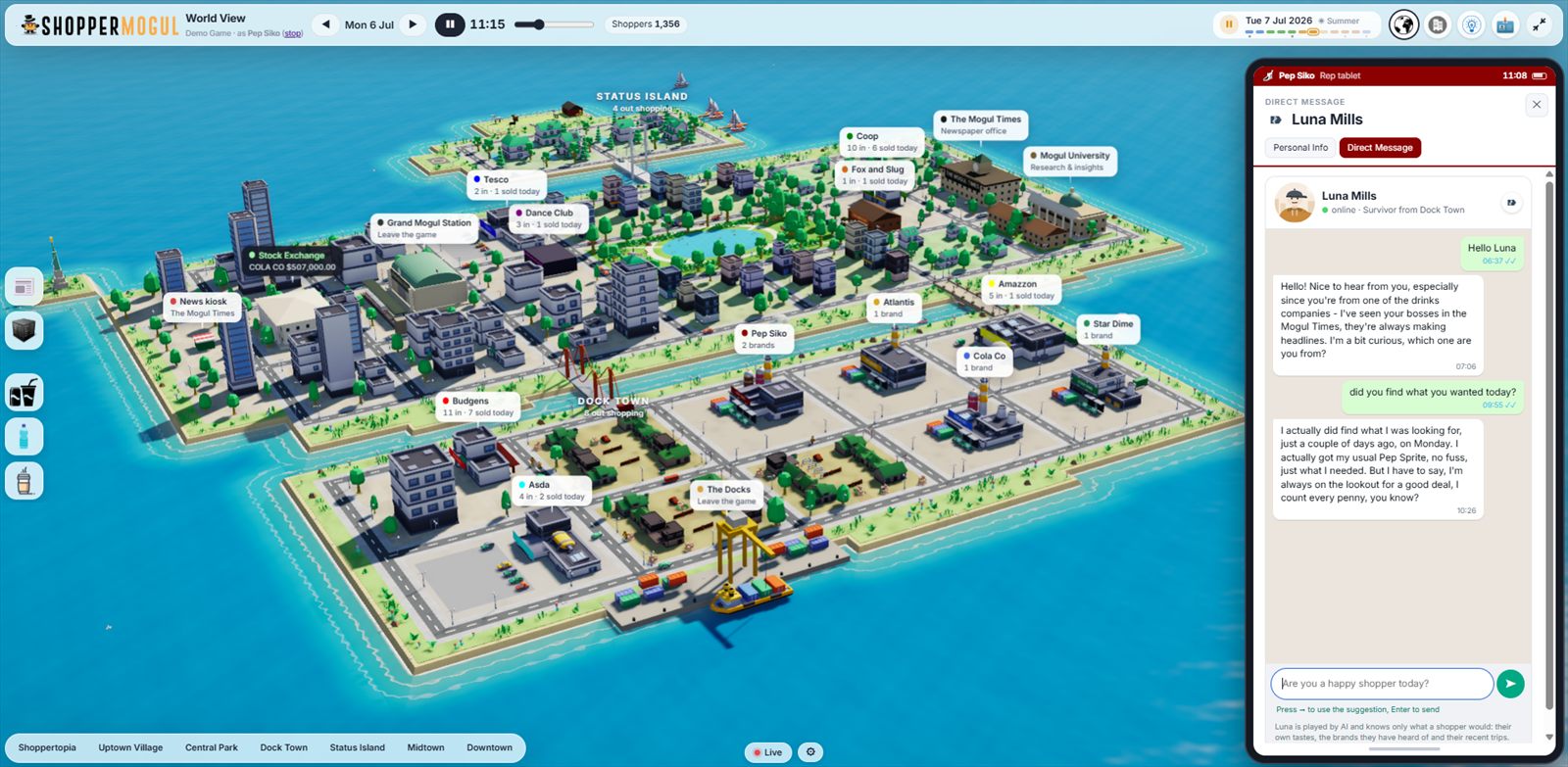
The Shopper Mogul world map: an island city of shops and districts, with a chat window open to an AI shopper
The world map: every shop, district and rival, with shoppers you can talk to

Played by managers and students from more than 30 consumer goods companies and universities, including

  • McKinsey
  • Carlsberg
  • Beam Suntory
  • EY
  • Warwick Business School
  • Central European University
  • Maastricht University
  • Symbiosis

Shopper Mogul in 30 seconds

Each player takes a seat on the board of a consumer goods company: launching brands, setting prices, negotiating with retailers and planning the supply chain. Every decision has a real time impact on sales and profits.

  1. 1

    Players Decide

    Brands, prices, trade terms and capacity

  2. 2

    Model Simulates

    Shoppers buy, retailers allocate the shelf

  3. 3

    Market Results

    P&L, market share, share price and news reports

  4. 4

    Learn and Celebrate

    Insights, advisers and the debrief

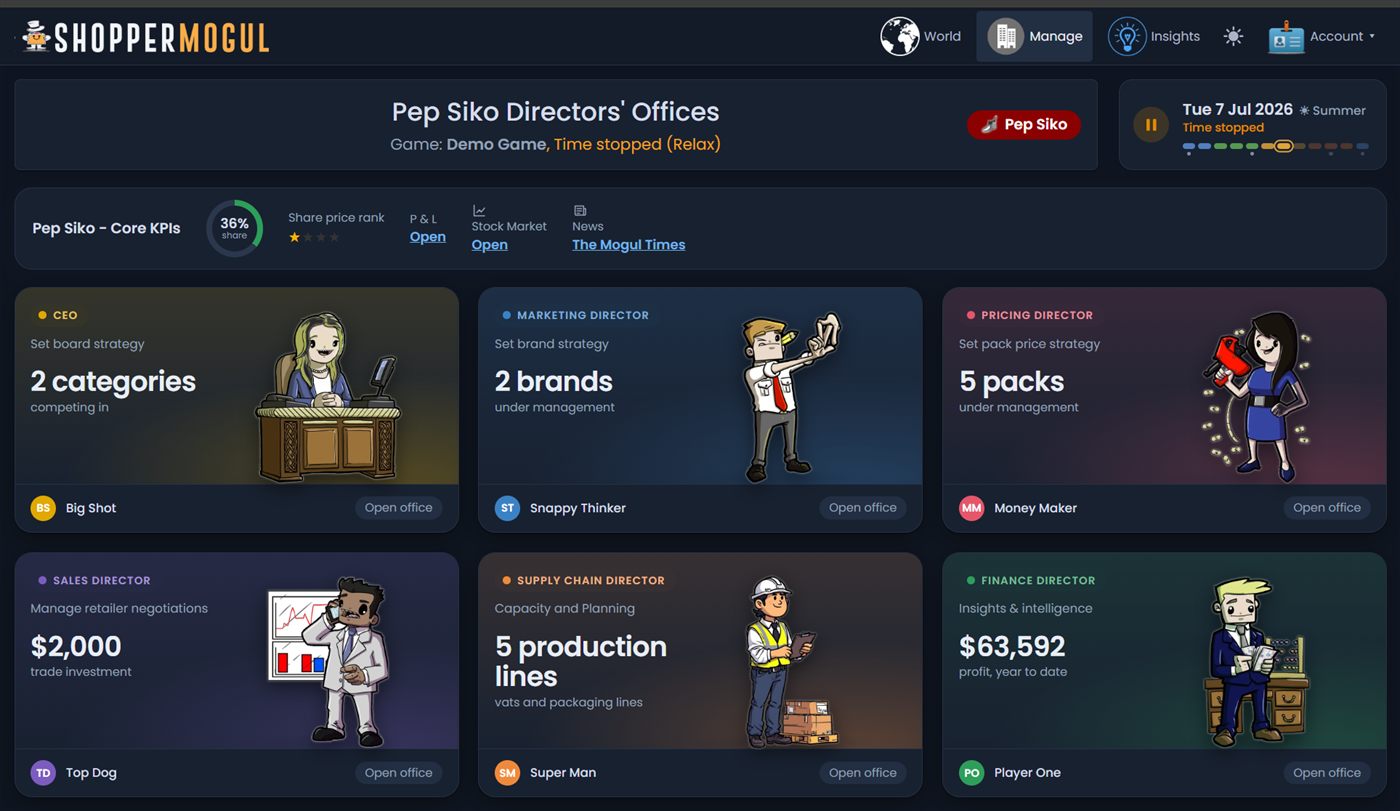
The Manage page: one company's directors' offices, each with its own illustrated director
The Manage page: one office for each director on the board

The simulation

Build a profitable portfolio in a market that feels alive

Build a profitable portfolio

At its heart, Shopper Mogul is about building a portfolio of brands that makes money. Teams decide which categories to compete in, which consumers to win and how each brand should stand out.

  • Know your consumers. Segments such as Aficionados, Hipsters and Survivors each have their own expectations, shopping and media habits.
  • Position every brand. Set brand quality and image, launch new brands and packs, and back them with media.
  • Profit, not just share. Every launch, price cut and promotion shows up in the P&L.
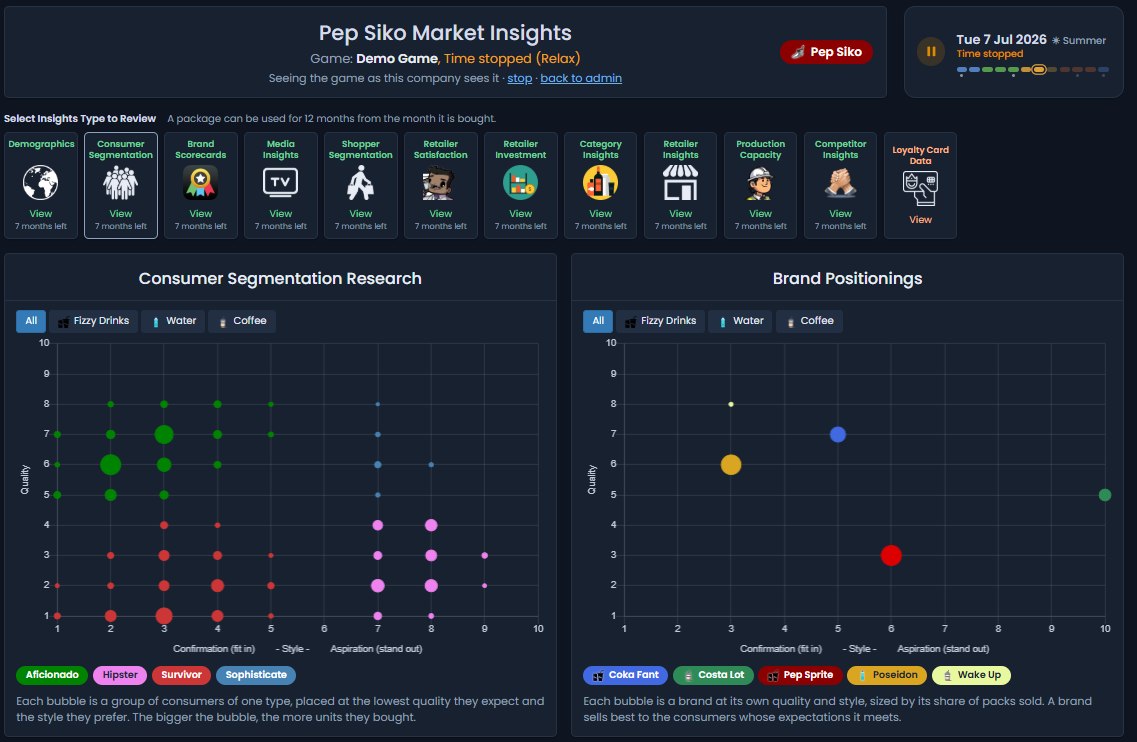
Consumer segmentation research beside a map of brand positionings by quality and style

A living market

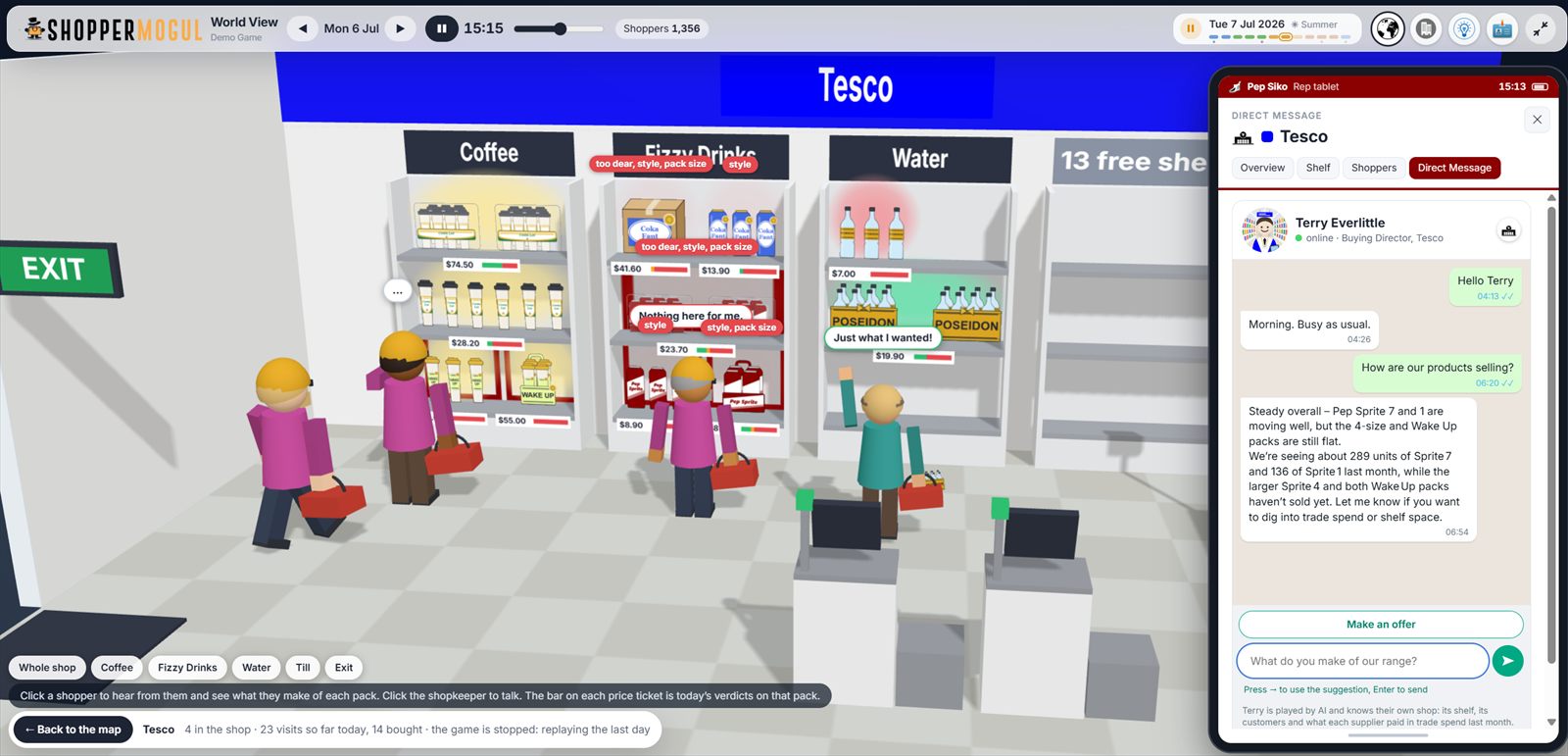
Explore a world of shops, districts and rivals, then step inside a shop to see what is on the shelf.

  • Step inside. Watch AI shoppers browse, and stop one for a chat.
  • Natural differences. Every consumer is unique, and differs by where they live and shop.
  • Real baskets. Shoppers spend across several categories.
Inside a shop: shoppers browse the coffee, fizzy drinks and water shelves while a player chats to the store's buyer

Win the shelf with retailers

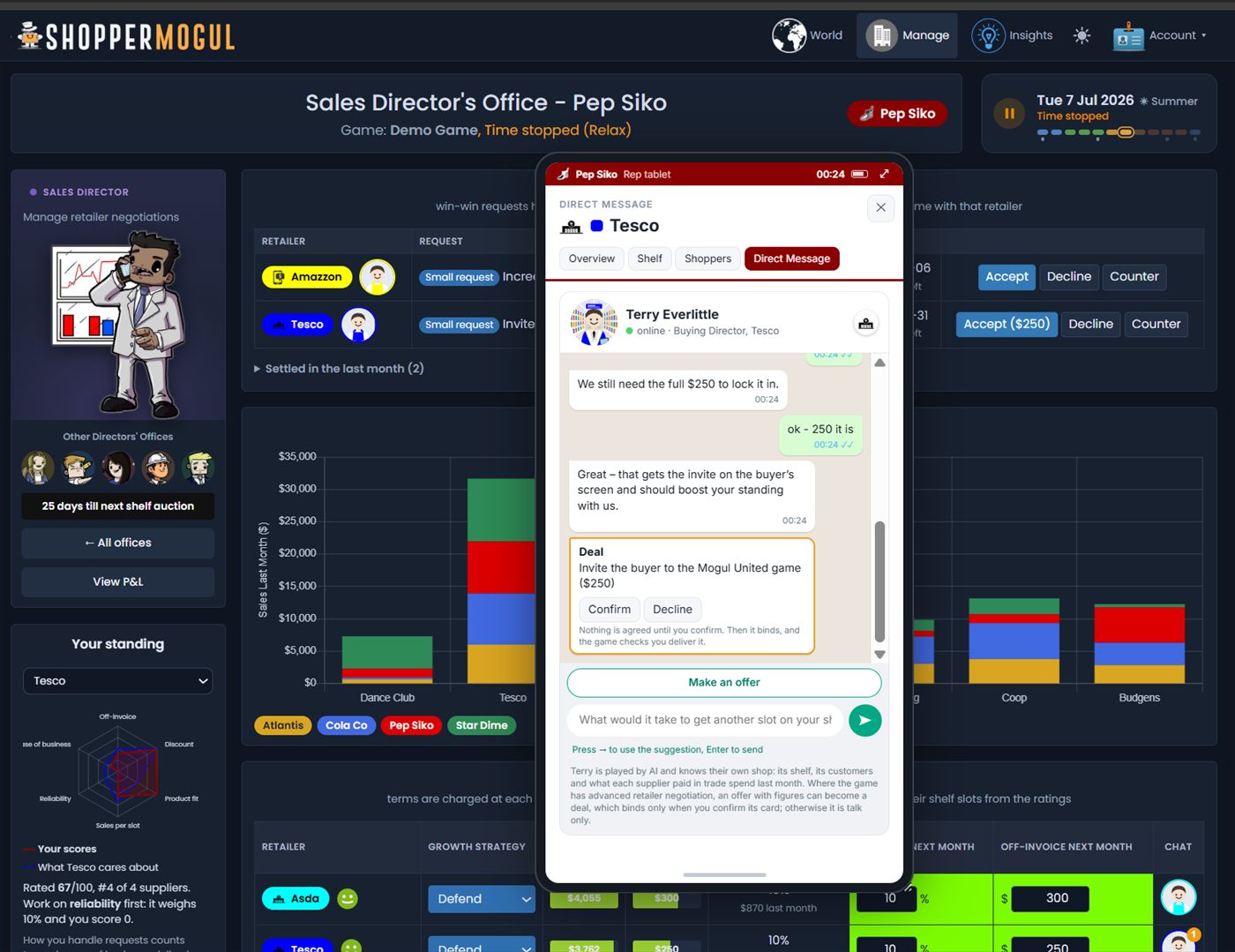
Every retailer decides which packs to list and how much shelf they get. Trade investment matters, and so does the relationship with each retail buyer.

  • Retailer sentiment. Each buyer rates every supplier; better standing means better presence.
  • Requests and deals. Buyers make requests; offers and counter-offers become binding deals.
  • Invoice terms. See how on- and off-invoice terms affect profit and relationships.
The sales director's office: each retailer's mood and trade terms, with a negotiation chat open

Match supply and demand

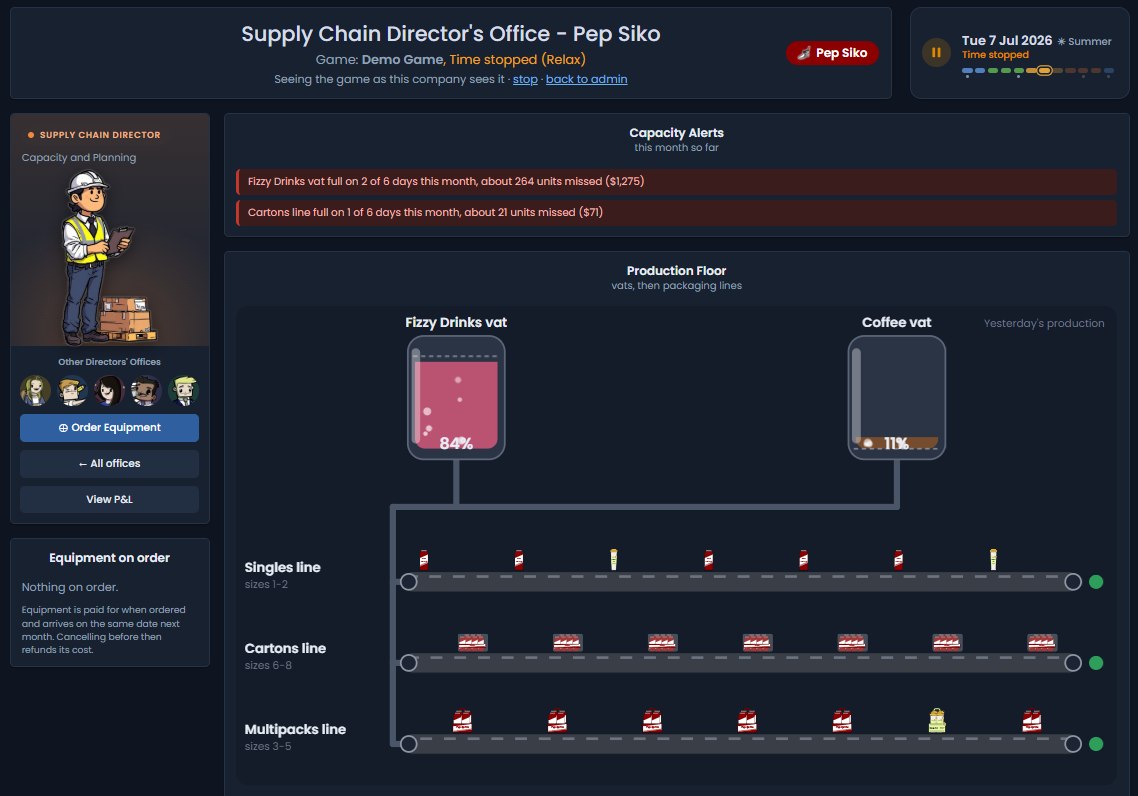
Every pack sold has to be made. The factory's production vats and packaging lines set how much companies can produce each day.

  • Too little capacity means empty shelves and missed sales, flagged in capacity alerts.
  • Too much ties up cash in equipment and idle overheads.
  • Plan ahead. New equipment takes time to bring online, so growth plans need the factory to keep up.
The supply chain director's office: capacity alerts and a production floor of vats and packaging lines

Use the Insights suite to inform market decisions

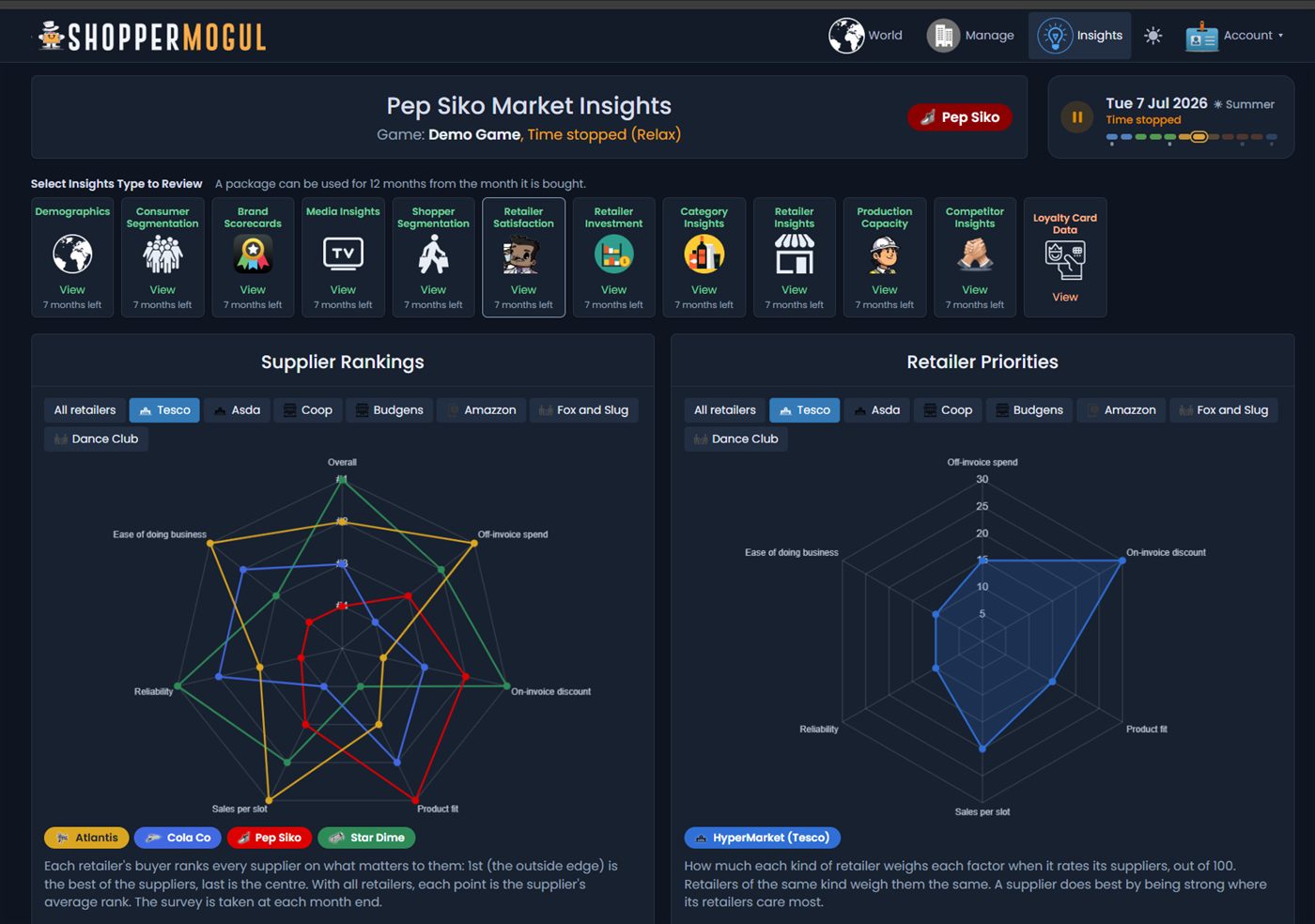
Research packages show who buys what, and where: demographics, consumer and shopper segmentation, brand scorecards, retailer satisfaction, competitor insights and loyalty card data.

  • Demographics. Who lives where, what they spend, and who goes home empty-handed.
  • Pay for what you need. Insight costs money, so teams must decide what is worth knowing.
  • An analyst on the team. Charlie walks players through what each chart is saying.
Market insight charts: supplier rankings, consumers by district and happy and unhappy shoppers

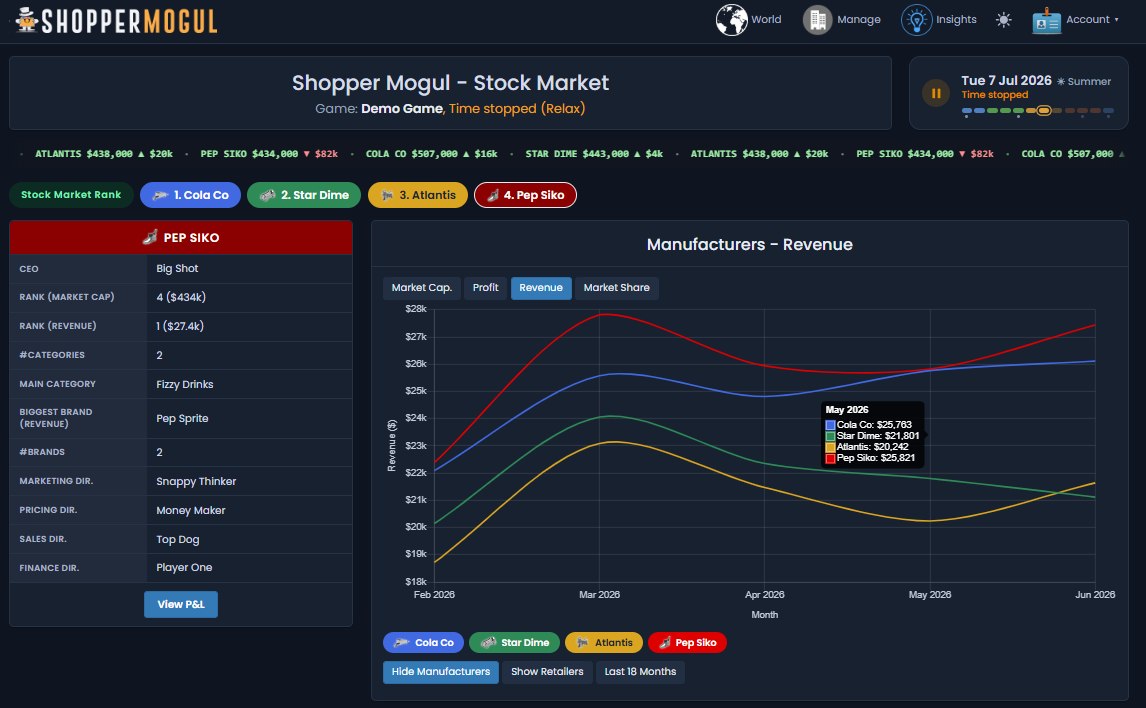
See who is making moves on the stock market

Share prices react to every company's results. Teams can see how each rival ranks by market value, revenue, profit and market share, and watch the trends month by month.

  • Open company results. Every rival's company-level P&L is public, so teams can learn from each other's moves.
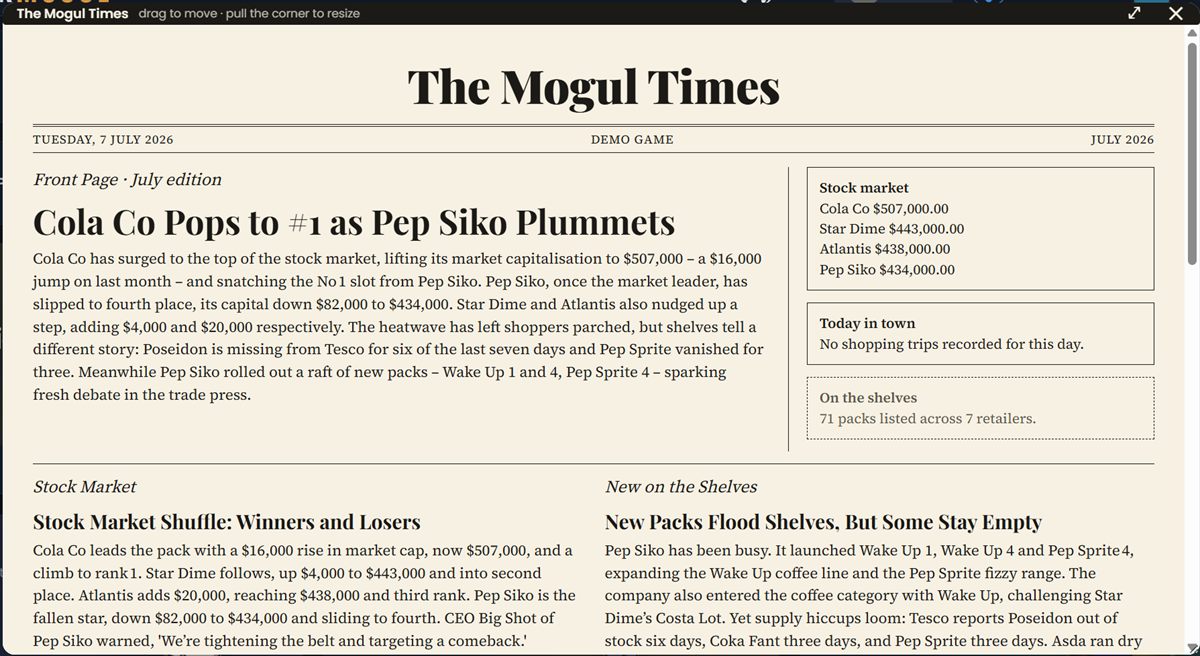
  • The Mogul Times. A cheeky market tabloid reports the winners and losers, with the players as its celebrities.
The stock market page: a share price ticker, company rankings and a revenue chart for each manufacturer

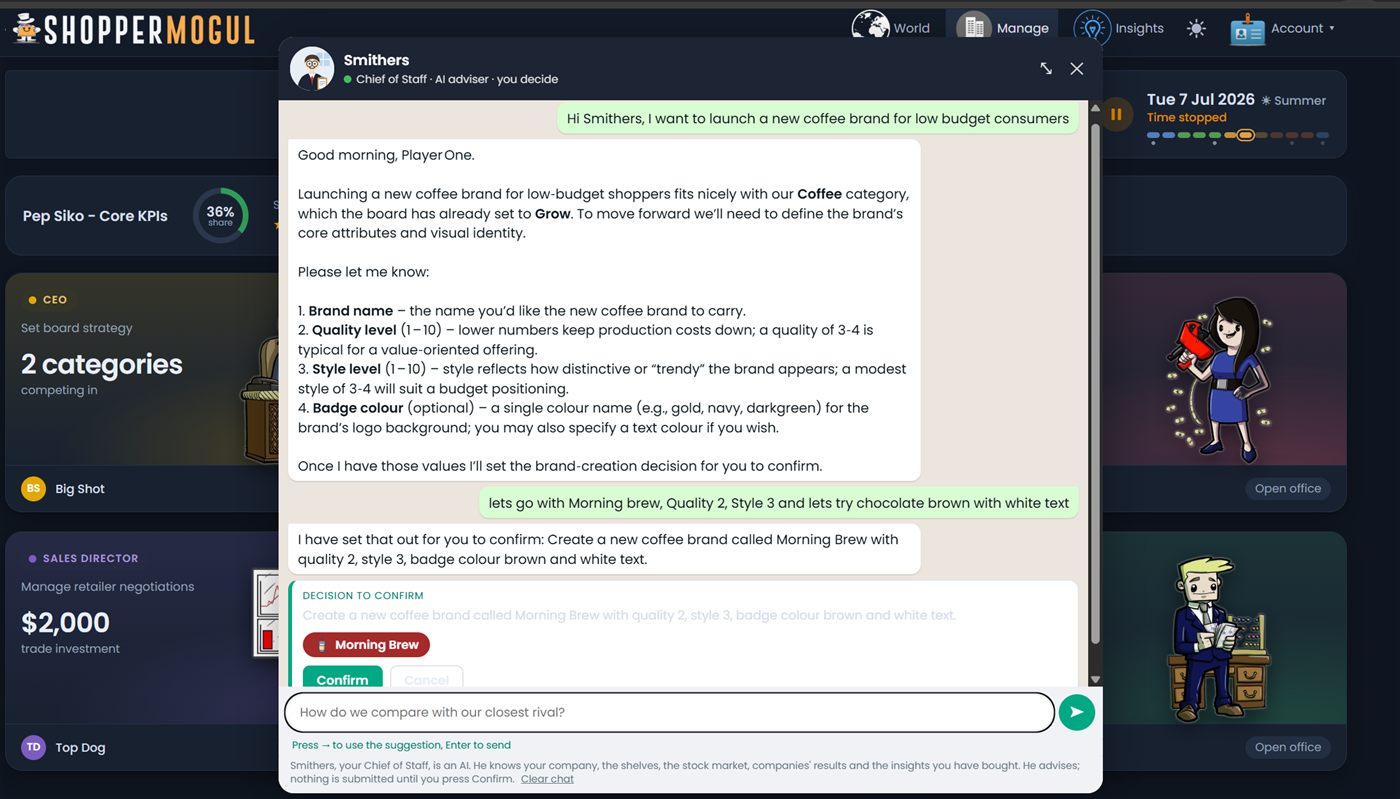
AI advisers that coach, not play

Advisers give evidence and options, not answers. Players learn to use AI without switching their brains off.

  • Smithers, Chief of Staff. Briefs the team, lays out options and turns agreed decisions into cards the players confirm.
  • Charlie, Data Analytics Adviser. Explains the charts and insight packages, and never makes the decisions.
  • Bring your own AI. Players can work from Claude, ChatGPT or another AI tool, connected over MCP.
Smithers, the AI Chief of Staff, helping a player set up a new coffee brand

The board

Six seats on the board

Every player runs one director's office. The board agree a strategy, then deliver and adapt in real time, reacting to market shocks as the game progresses.

  • CEO

    Set board strategy

    Sets the company's direction and the strategy for each category, gives out the seats on the board, and leads the presentation to investors.

  • Marketing Director

    Set brand strategy

    Builds the appeal of the brand portfolio: positioning on quality and image, planning new brand launches and media spend.

  • Pricing Director

    Set pack price strategy

    Grows revenue by getting the range of packs and their prices right for each consumer and shopping trip.

  • Sales Director

    Manage retailer negotiations

    Invests with retailers, negotiates with their buyers and decides which packs each one lists first.

  • Supply Chain Director

    Capacity and planning

    Matches supply to demand: orders production facilities to balance supply chain capacity, reliability and cost.

  • Finance Director

    Insights and intelligence

    Reads the shape of the company's finances, steers the team on where money earns its keep, and decides what is paid to shareholders.

For facilitators

Built for the person running the room

  • Run sheet

    Plan the day in the sim: briefs, breaks, recalls and announcements, all timed and visible to players.

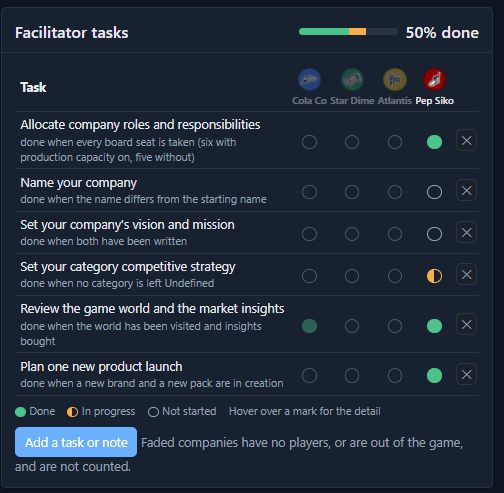
  • Task tracking

    Set tasks such as “Review market insights” or “Plan a new brand launch” and see live which teams have started or finished.

  • Broadcasts

    Message every team at once. Alert players to market shocks, news or summons.

  • Easy set-up

    Import a whole cohort in one go, and run multi-game events with several professors.

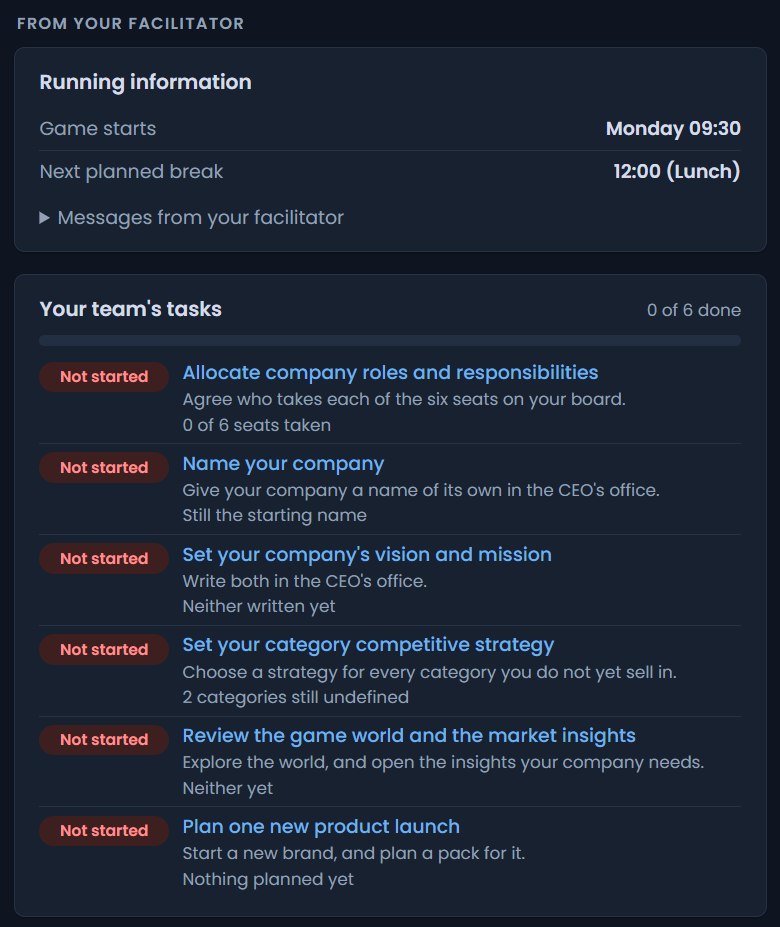
A team's task list and running information, as players see it
What players see
Facilitator tracker showing which teams have completed each task
Facilitator tracker

How an event works

From kick-off to debrief

  1. Set up

    Agree goals and the facilitation approach, configure the market and import your players.

  2. Kick-off

    Teams form boards, take their roles and set their strategy.

  3. Live play

    The market runs in real time, with shocks, breaks and media moments. Every decision is captured for analysis afterwards.

  4. Debrief

    Results, share prices, prizes and lessons learned, team by team.

Typical format: 1–2 days, teams of 4–6, from 20 to 200+ players.
Optional extras: a media room with recorded interviews, investor visits and pitches, mid-game head-hunting, and evening activities such as trade safaris.

Who it's for

Two kinds of classroom

Universities and business schools

Put your students in the boardroom. A capstone or intensive module where marketing, finance and strategy theory meet a live, competitive market.

  • MBA, MSc and undergraduate cohorts, from one class to a whole year group
  • Sign-in through your university's own login
  • Decision data for assessment and reflection

Companies

Shopper Mogul began life inside capability programmes for consumer goods marketers. It builds commercial skills, return-on-investment thinking and collaboration between departments.

  • Commercial, sales, marketing and finance teams
  • Graduate and leadership programmes, and team building
  • Sign-in through your own single sign-on

Platform

Modern, secure and IT-friendly

  • Zero-trust sign-in

    No passwords to store, share or reset. Access runs through Google, single sign-on or your university's login.

  • Runs in the browser

    Nothing to install, on any laptop.

  • Built to scale

    Runs on a global cloud network, from one class to a whole cohort.

  • A modern look

    A fresh design, with a dark mode.

Partners

Shopper Mogul around the world

Our partners run Shopper Mogul events in their own markets.

Interested in becoming a partner? Get in touch.

About

Why we built it

Shopper Mogul was created by Laurence Trickey and David Trickey. Laurence is a commercial marketer who spent two decades driving growth at international consumer goods companies and strategy consultancies. David is an internet operations engineer who has spent his life making technology safe, intuitive and useful.

We were delivering capability programmes for consumer goods marketers and could not find a simulation that captured the real competition and game theory of commercial strategy. So we built one. This next generation adds a living market, AI shoppers and buyers you can talk to, and advisers that coach rather than play.

Follow Shopper Mogul on LinkedIn

The Mogul Times, the in-game newspaper, reporting on the players' companies
The Mogul Times: the market's own tabloid

Put your team in the boardroom

Let's book a 30-minute demo and talk about a pilot.

Tell us a little about your programme and we'll come back to you within one working day to find a time.

Download the info pack

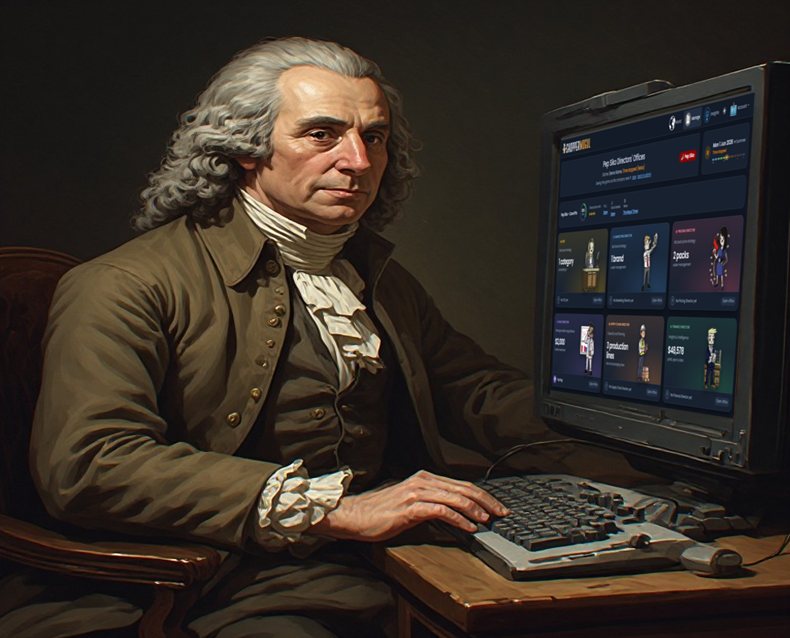
Benjamin Franklin at an anachronistic computer monitor, playing Shopper Mogul

Tell me and I forget. Teach me and I may remember. Involve me and I learn.

Often attributed to Benjamin Franklin; after Xunzi, c. 300 BC

Book a demo

We use your details only to reply to you. Privacy

Or email ltrickey@shoppermogul.com · LinkedIn